The calendar is the most underused growth lever on Amazon.
Brands already have all eyes on Q4, but in terms of incremental lift, the opportunity is much more near term:
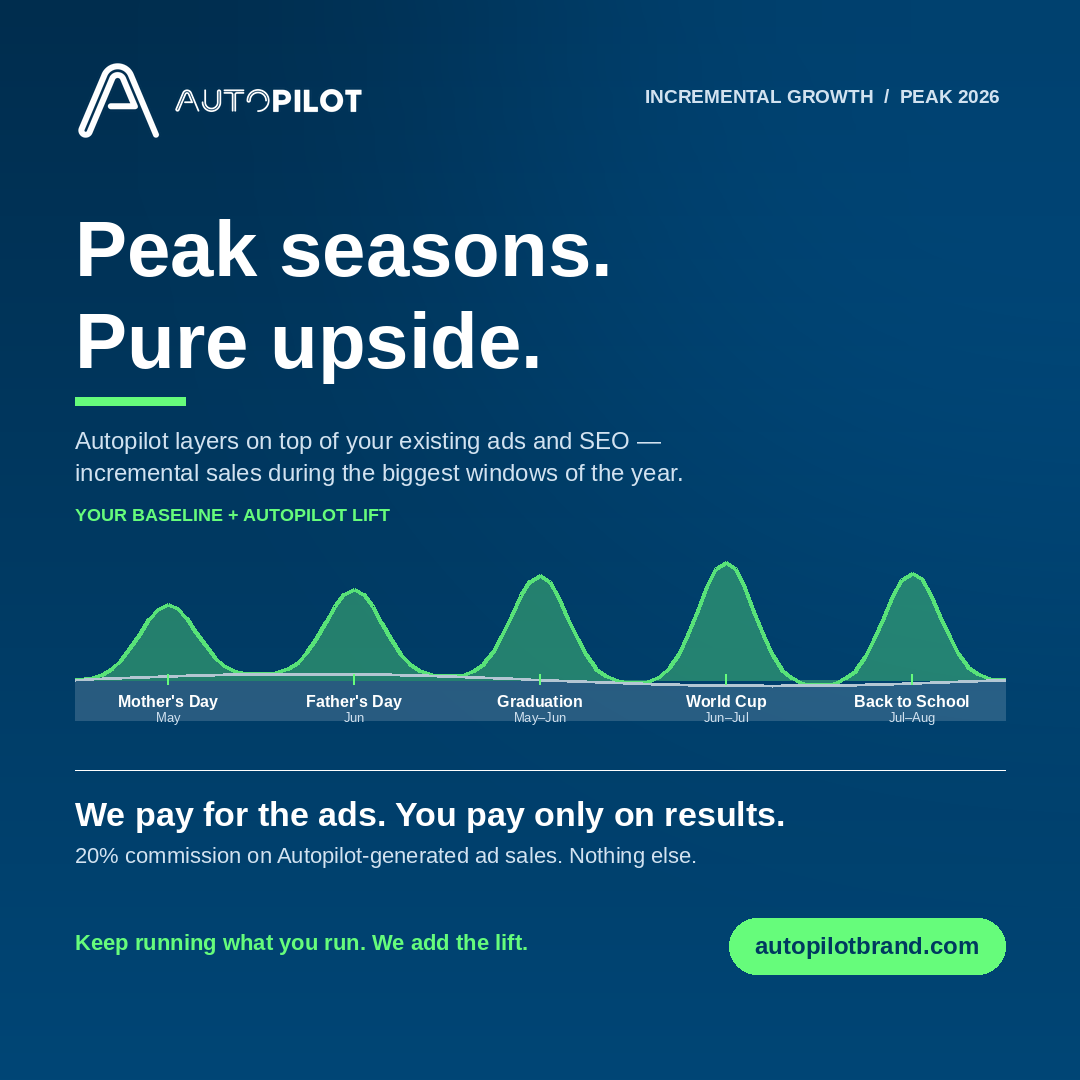
Between May and August, five distinct peak-intent windows open in rapid succession: Mother's Day, Father's Day, Graduation, the FIFA World Cup, and Back to School. Shoppers move into active buying mode, search volume climbs, and competitive bids inflate. For brands that are ready, this stretch can rival Q4. For brands that aren't, it's a quarter of missed demand that never comes back.
The frustrating part is that most brands are investing during these windows. Sponsored Products budgets go up. Promotions get scheduled. Creative gets refreshed. And yet a large share of the available demand still slips past - not because the paid strategy is generally wrong, but because the underlying listings aren't built to catch it and short-seasonal keyword opportunity windows are missed.
That gap is the opportunity.
Paid advertising and organic visibility are two different muscles. Ads buy you placement for the keywords you bid on. Organic coverage determines how many of the other searches - the long tail, the adjacent use cases, the seasonal phrasings - your product even shows up for in the first place.
During peak seasons, shopper language gets wider, not narrower. People who'd normally search "running shoes" start searching "graduation gift for runner" or "Father's Day gift for marathon dad." People shopping for kids' supplies in July are already typing "back to school" modifiers into queries they used to type plain. If your listings aren't structured to match that intent, your paid campaigns are bidding into a shrinking slice of the total demand - and your organic rankings are invisible for the rest of it.
This is the ceiling almost every brand hits at peak: the paid program is working, but the catalog underneath it isn't set up to compound the lift.
Autopilot is built for exactly this moment. We don't replace your ads, your agency, or your in-house team. We layer on top.
Our system runs a continuous optimization loop across your catalog - guided by real keyword demand, competitor benchmarks, and how Amazon's discovery engines (including Rufus and generative search) actually surface products. We identify the high-intent keywords where your ASINs should be ranking but currently aren't, then systematically optimize titles, bullets, descriptions, and backend structure to capture that demand. Listings get rewritten for shopper intent - use cases, gifting moments, seasonality, materials, outcomes - so products convert once discovered.
The result of our listing optimization is a measurable organic lift, typically around 20% per optimized ASIN. But now we are layering targeted seasonal ads on top of this. Both show up as incremental sales on top of whatever you're already running. Nothing about your paid program changes. Nothing about your creative changes. Your team keeps executing. We add the lift.
Here's what makes this work during peak season specifically: Autopilot pays for the ads.
You read that right. We pay for the ad spend required to drive the incremental seasonal lift our paid optimizations generate.
Brands pay a 20% commission on Autopilot-generated ad sales only. Nothing else. No retainer. No setup fee. No platform fee. If we don't drive incremental sales, you don't pay.
Sure, brands can bundle this with our organic listing optimization, but if your focus is on the paid side, we can just focus on that as well.
That structure was designed on purpose. Seasonal windows are too short and too competitive for brands to experiment with yet another vendor, negotiate a budget, and hope it works out. Putting the risk on us means the conversation shifts from "can we afford to try this?" to "how fast can we turn it on?"
Let's be concrete about what's actually on the table between now and Labor Day.
Mother's Day (peaks early May) - one of the highest-intent gifting windows of the year. Shoppers search by relationship, not by product category. Listings optimized around gifting language and recipient occasions capture a disproportionate share.
Father's Day (peaks mid-June) - tools, tech, outdoor, grilling, and experience-adjacent gifts dominate. Brands outside those obvious categories routinely leave money on the table by not surfacing in gift-context queries.
Graduation (May through early June) - a uniquely concentrated gifting moment where relevant products in apparel, accessories, dorm goods, tech, and celebration supplies see sharp search spikes. Most catalogs aren't structured to catch it.
FIFA World Cup (June–July) - a global attention event that lifts apparel, food & beverage, entertaining supplies, and team-gear adjacencies. Even brands that don't think of themselves as "soccer brands" see ambient lift if their listings are set up for it.
Back to School (July–August) - the longest and most forgiving of the five windows, with demand building steadily from mid-July. Supplies, apparel, electronics, and dorm categories all surge, and shopper queries shift meaningfully toward back-to-school framing even for everyday products.
Any single one of these justifies the effort. Five in sequence, with no downtime between them, is a once-a-year compounding opportunity.
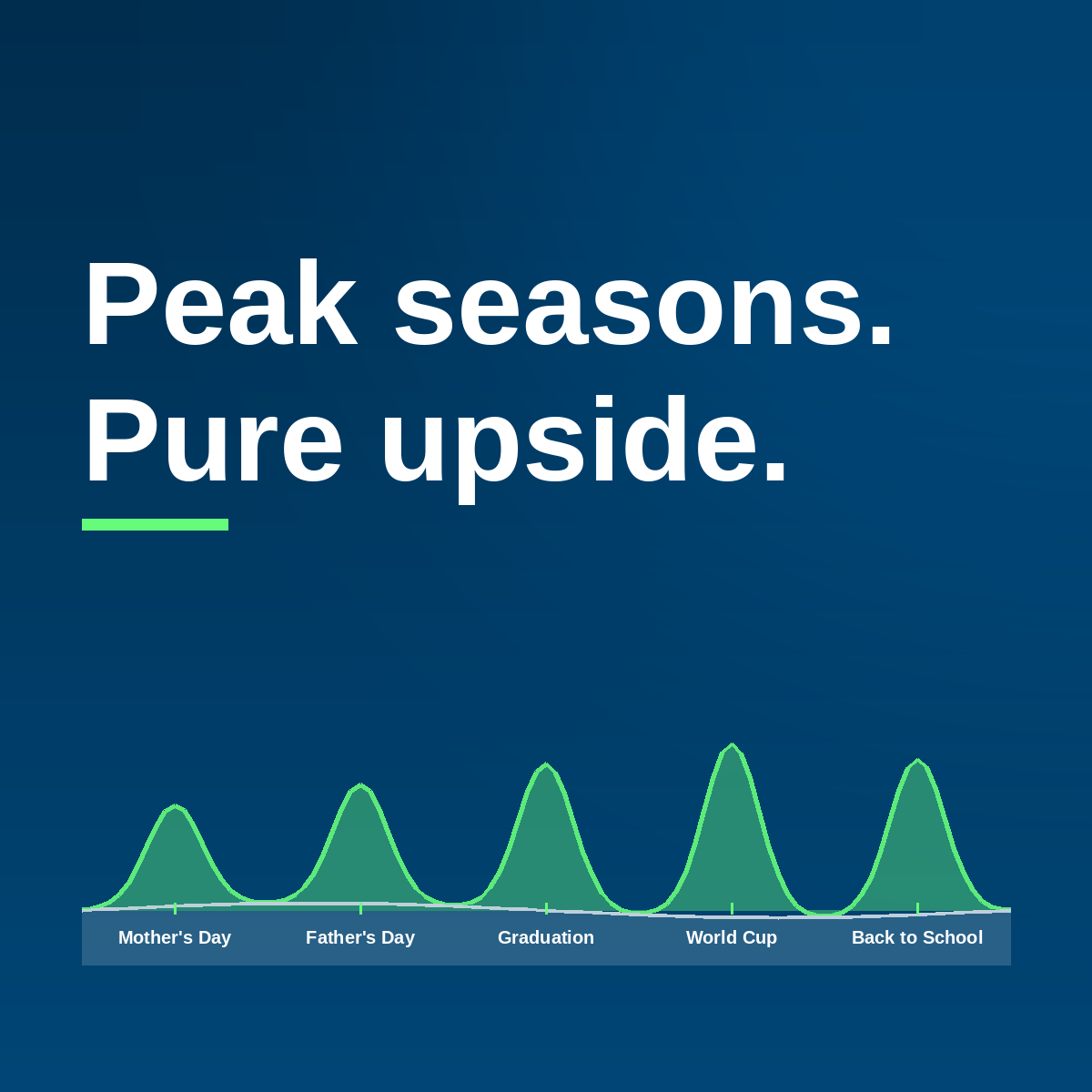
If you want Autopilot working on your catalog before Mother's Day, now is the window to start. Optimization cycles take a few days to deploy and a few more to compound in the rankings and market share - the earlier we begin, the more of the Mother's Day curve we capture, and the more momentum carries into the Father's Day and Graduation windows that follow.
There is no cost to find out whether it's worth it.
We'll audit your catalog, identify the incremental opportunity, and show you exactly where we'd expect lift to come from. If the numbers aren't compelling, we say so.
Keep running everything you run today. Let us add the peak-season lift on top.
Ready to see the opportunity in your catalog?
Get in touch at https://www.autopilotbrand.com/brand-evaluation - we pay for the ads, you pay only on results.
Autopilot, Inc. is an Amazon listing optimization and AI discovery service. Since 2023 it has published more than 2 million listing updates for 450+ brands.
Agentsites is a trademark or registered trademark of EverythingMachines.